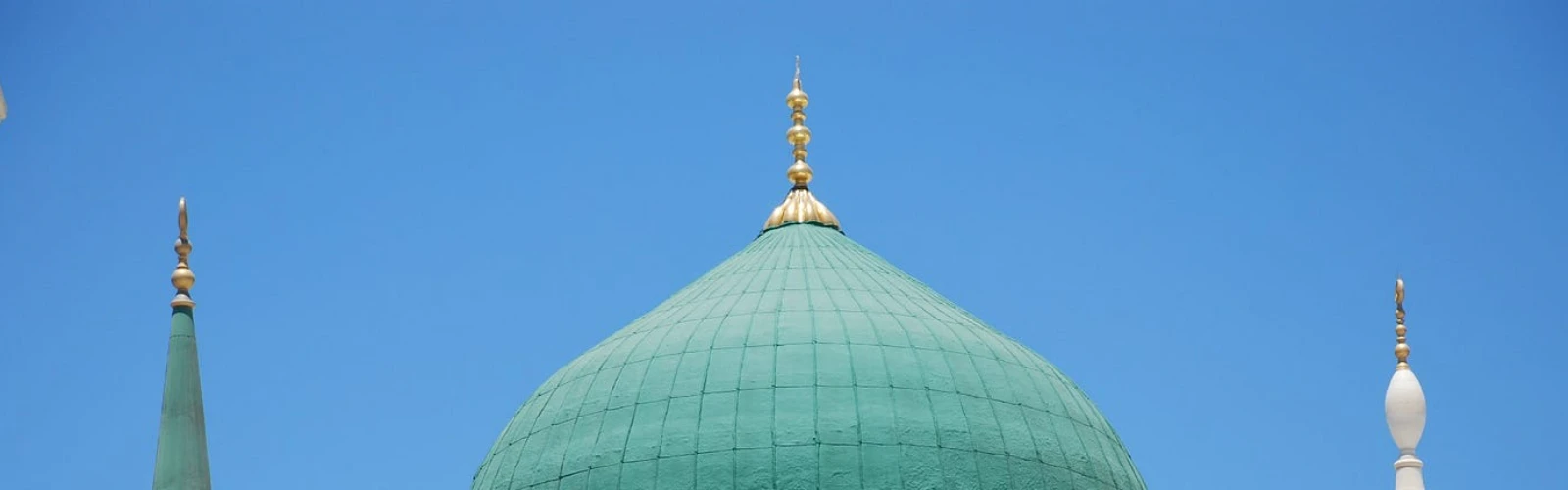
The Secret of the Green Dome of Masjid Nabawi

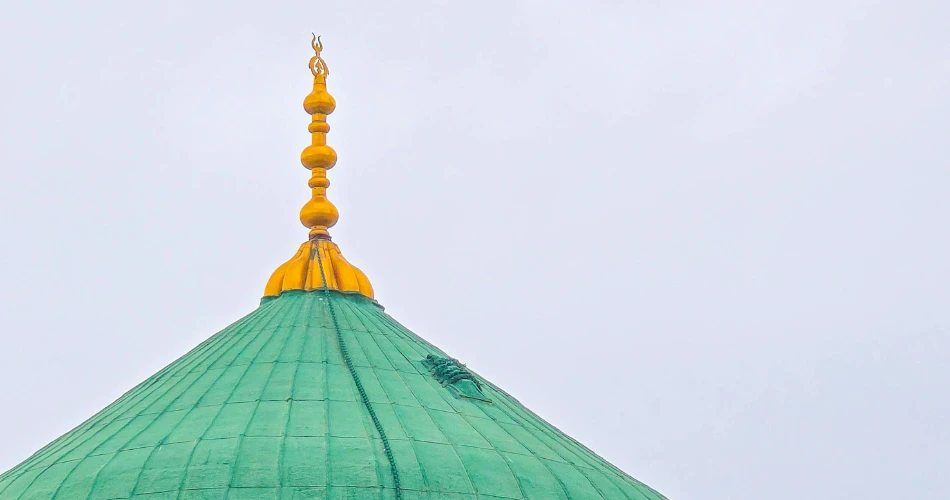
Let’s uncover the story behind one of the most iconic symbols of Madinah and its deep-rooted spiritual and historical significance.
Masjid Al Nabawi, also known as the Prophet’s Mosque, is situated in the sacred city of Medina in the Al Madinah Province. People always wonder why Masjid Al Nabawi is important. Its importance lies in the fact that Masjid Al Nabawi was constructed by the Prophet Muhammad (PBUH) after he migrated from Makkah to Medina. The mosque is home to the resting place of the Prophet (SAWW), along with his companions, including Hazrat Abu Bakar (RA) and Hazrat Umar (RA), as well as many sacred places like the Mimbar and Riyad ul Jannah (A Peace of Heaven). Moreover, the resting place of Hazrat Muhammad (SAWW) is covered with a famous green dome, a shining symbol of faith that rises over Masjid Al Nabawi and makes it recognizable from a long distance. The dome, with its beautiful green color and stunning structure, is more than a landmark; it is a representation of Islamic history and the lasting influence of the life and teachings of Hazrat Muhammad (SAWW).
In this blog, we will dive deeper into the history, construction, myths, facts, renovations, and even more information about the Green Dome of Masjid Al Nabawi. Keep reading to find out more!
The History of the Green Dome of Masjid Al Nabawi
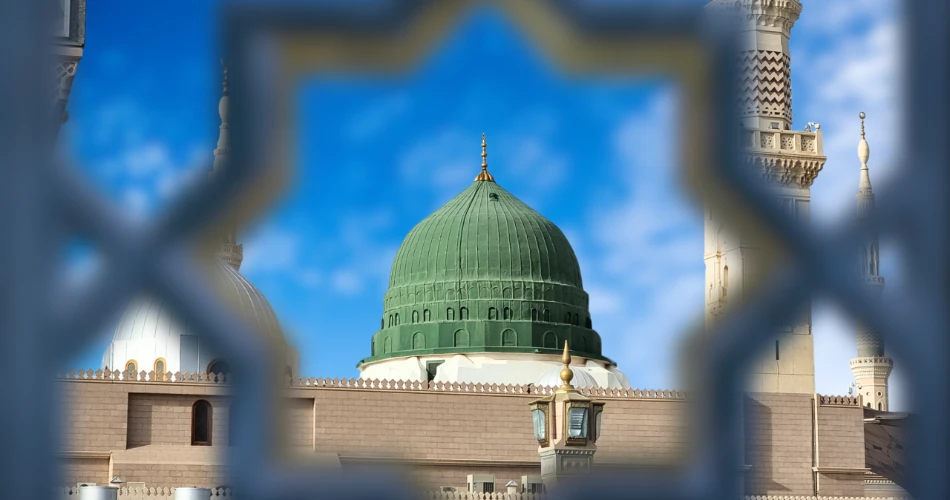
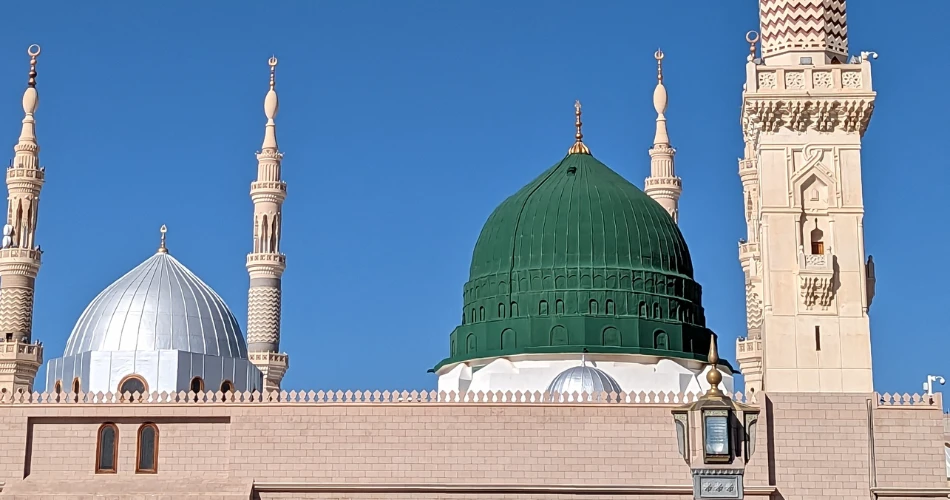
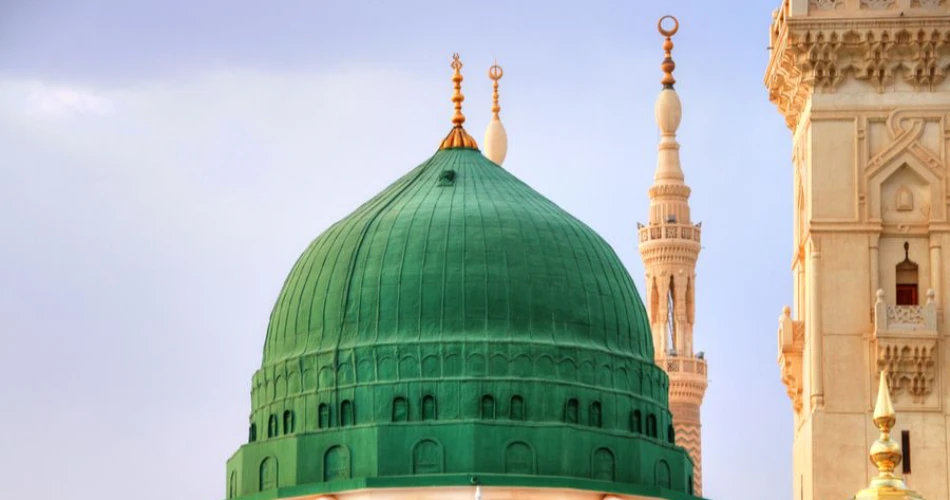
The Green Dome, also known as Kubbatul Hadra in Arabic, is the giant dome that is situated on top of the grave of Hazrat Muhammad (SAWW) in Masjid Al Nabawi. This dome was first constructed in 1481 by Sultan Qa’itbay and was extended and renovated in 1818 by the Ottoman Sultan Mahmud II. The dome was painted green in 1837 in order to set it apart from the other numerous silver-colored domes of the mosque. Today, it serves as a symbol of respect and Islamic ancestry, and its unique color makes it instantly recognizable to visitors. It is the focal point for pilgrims, especially marking the resting place of the Prophet Muhammad (PBUH).
The Construction and Architecture of the Green Dome of Masjid Al Nabawi
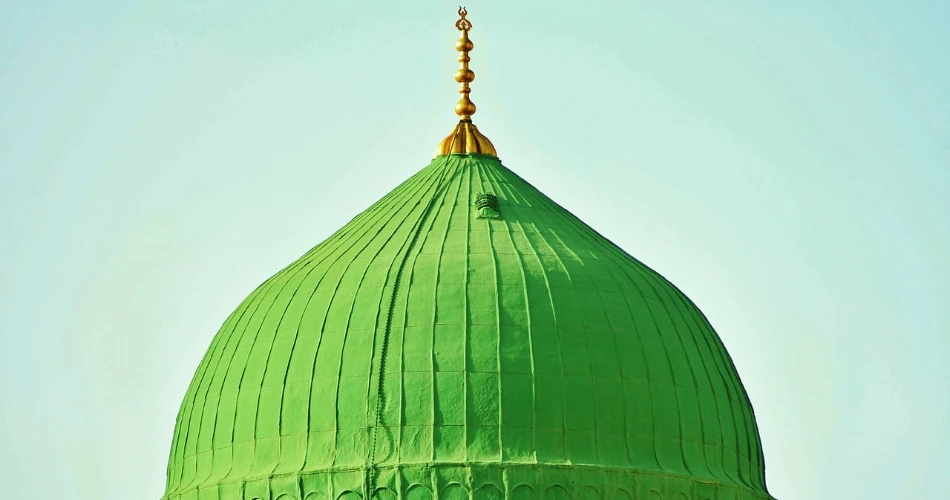
The Masjid Al Nabawi Green Dome was expanded and evolved over time with the help of succeeding kings. The roof of the Prophet’s Mosque was flat originally; however, under the Umayyad Caliph Al Walid I, between 879 and 895 AD, a dome was built on top of the resting place of Prophet Muhammad (SAWW) and his companions. The dome was first constructed of plain wood, but in order to make it last longer, harder materials, including brick and lead, were used in its reconstruction. Unfortunately, in 1481, a major fire damaged parts of the mosque, and the mosque had to be rebuilt completely. The wooden dome was replaced with stronger brickwork, and lead sheets were added for protection under the rule of Mamluk Sultan Qaitbay. These upgrades protected the Green Dome from natural disasters and fires while keeping the hallowed building intact for future generations to respect and tour.
In 1837, the dome was painted green, which gives it a distinctive and identifiable look. Today, it is one of the most well-known features of Masjid Al Nabawi and is adored by all Muslims around the world.
The top of the Green Dome features a golden ornament that enhances its splendor and grace. This decoration was installed by Sultan Mahmud II of the Ottoman Empire. Its radiant features represent the significance of the Prophet’s Mosque, and pilgrims can see it shining from a distance.
The Window of the Green Dome
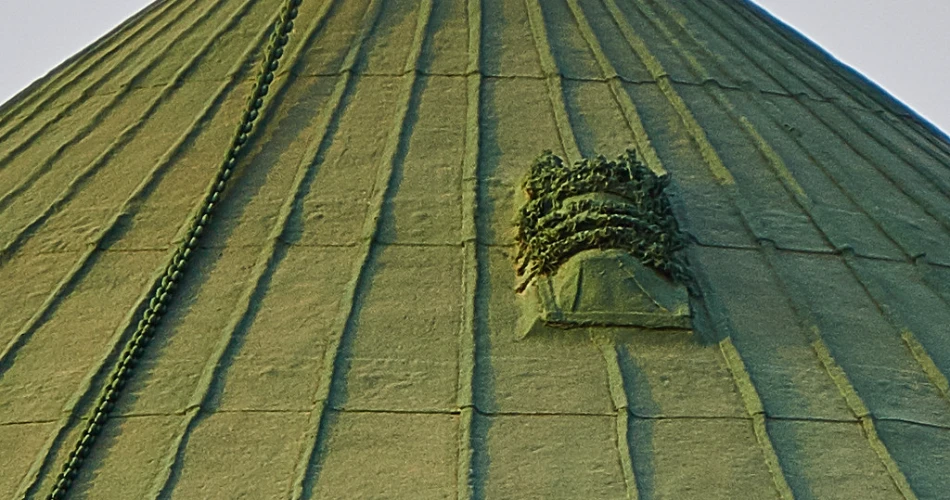
The Green Dome covers the grave of the Prophet Muhammad (SAWW), and inside the dome, there is a small window situated at head level above the Prophet’s grave. It is a single window in the tomb area and allows rain and sunlight to enter the burial place, signifying the Prophet’s relationship with the sky. During a terrible famine in Medina, Hazrat Ayesha (RA) stated that the palm fibers covering the grave might prevent contact with the sky. As a result, the palm fibers were removed from above the grave, and it rained for three days in Madinah. This window is still open today and is covered by a wire mesh in order to keep the birds out. It symbolizes the Prophet’s resting place and heaven coming together.
The Myths About the Green Dome of Masjid Al Nabawi
The most famous myth about the Green Dome of Masjid Al Nabawi is that some people believed that there is a man buried at the top of the dome. According to the story, he intended to demolish the dome; however, lightning hit him right away and instantly killed him. It is believed that people were unable to remove the body from the dome, so a grave was made on the dome. Sheikh Al Zubaidi explained this story as a warning to everyone who attempts to damage the Prophet’s Mosque. However, this story is untrue, and there is no grave at the top of the Green Dome. It is just a lie that people are spreading.
The Origin of the Green Color of the Dome
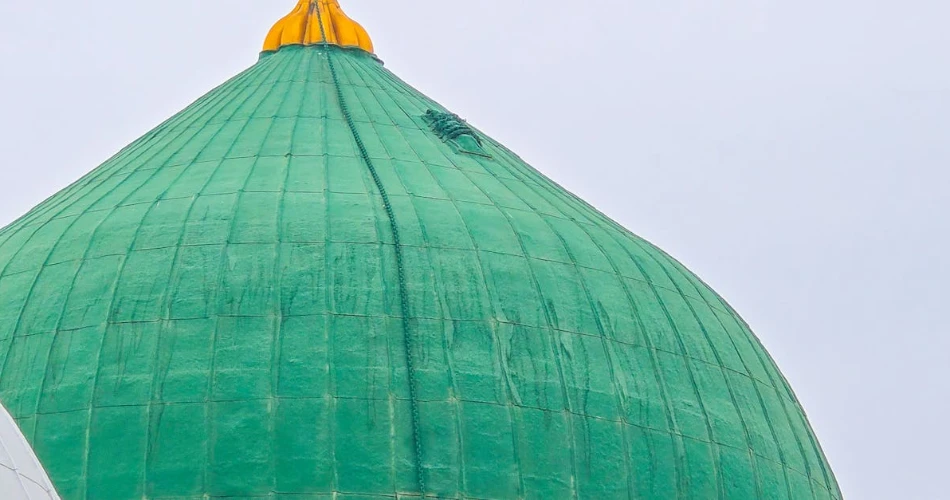
The famous Green Dome of the Prophet’s Mosque was not always green; it was originally constructed from wood and had a natural brown color. Over time, it was painted white, blue, and even purple during different restorations that blended structural and aesthetic upgrades. In 1837, the dome was painted green at the request of Ottoman Sultan Abd al-Hameed, giving it its current color. This shade of green came to represent the Prophet’s Mosque and make it an easily identifiable landmark, attracting millions of Muslims to Madinah every year.
Who Are the Guardians of the Green Dome?
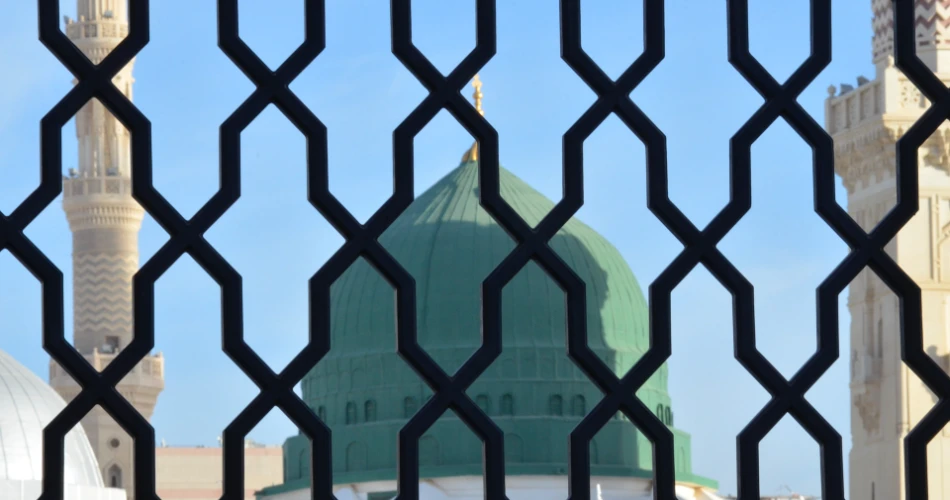
The sacred area of Hazrat Muhammad (SAWW) under the Green Dome in Madinah has always been carefully protected. In the past, it was protected by Abyssinian eunuchs, also known as Kasim. These are men without testicles who lead a holy and solitary life and rarely speak to others. They held the keys of the chamber and made sure the tomb was secure. Today, official security guards known as Askar have taken the position of the eunuchs due to new Saudi legislation. There are only a few eunuchs left in Medina, and the government is documenting their lives to preserve their history and dedication to Masjid Al Nabawi.
What Challenges Has the Green Dome Undergone?
The Green Dome of the Prophet’s Mosque has endured many religious and political challenges. When Wahhabi forces ruled Medina during the nineteenth century, they destroyed several tombs and domes because they disliked any buildings that were associated with grave worship. But the Green Dome was still there. Some people claim that it was difficult to destroy due to its sturdy design, while others think it was kept for respectful reasons. Later, the Saudi government took over in the 20th century and imposed restrictions on tomb worship; however, the dome was left in its place. This makes the Green Dome a unique survivor and representation of the mosque’s past.
Reserve your room at Zowar International Hotel for your visit to Medina.

About Author
Alex is a successful travel blogger; he gives great tips to travel enthusiasts regarding how they can save money on their vacations. He's been to 40 + countries, and he mainly focuses on how to cut down costs during travel.